
The Mistake Almost Everyone Makes First
It's a chilly morning, you're already running late, and the garage door won't budge or groans halfway up. The instinct is to hit the opener button again and again, or to muscle the door manually, yanking on the bottom to break it free. It's tempting because it usually looks like it's almost working — the door creeps an inch, the opener motor strains, and you figure one more push will do it.
That's exactly how a bent track, a stripped opener gear, or a snapped spring happens. A garage door that's stuck to the slab or sluggish from cold isn't being lazy — something is physically binding it, and forcing a motor or a human arm against that resistance just turns a fifteen-minute fix into a same-day repair call.
What You're Actually Seeing
In Hendry County, hard freezes are rare, but a cold front can still drop overnight temperatures low enough to cause real trouble, especially after a humid evening or an afternoon downpour left moisture sitting on the slab and the bottom seal. The symptoms usually show up as one of these:
- The door looks completely sealed to the garage floor and won't lift at all until you hear or feel a crack as it releases
- The door rises a few inches, then stalls, reverses, or the opener clicks and strains without movement
- Movement is noticeably slower than normal, with more grinding or popping than usual
- The door opens on manual pull but the automatic opener seems weak or underpowered
None of these point to one single cause, which is why a technician works through them in a specific order — starting with the simplest, most common culprit before moving to anything involving springs or the opener itself.
1. The Bottom Seal Frozen to the Slab
This is the first thing to rule out, because it's the most common and the easiest to fix badly. The rubber weatherstrip along the bottom of the door traps a thin layer of moisture against the concrete overnight. On a cold morning, that moisture can bond the seal to the slab just enough to resist the opener's pull.
The fix: Pour warm (not boiling) water along the seal line to loosen the bond, then try the door again. If this happens repeatedly through the cooler months, the seal itself may be worn, cracked, or no longer sitting flush, which lets more moisture collect underneath it. A worn seal is a cheap part to replace and solves the problem at the source instead of thawing it out every cold snap.
2. Track Binding From Swelling or Corrosion
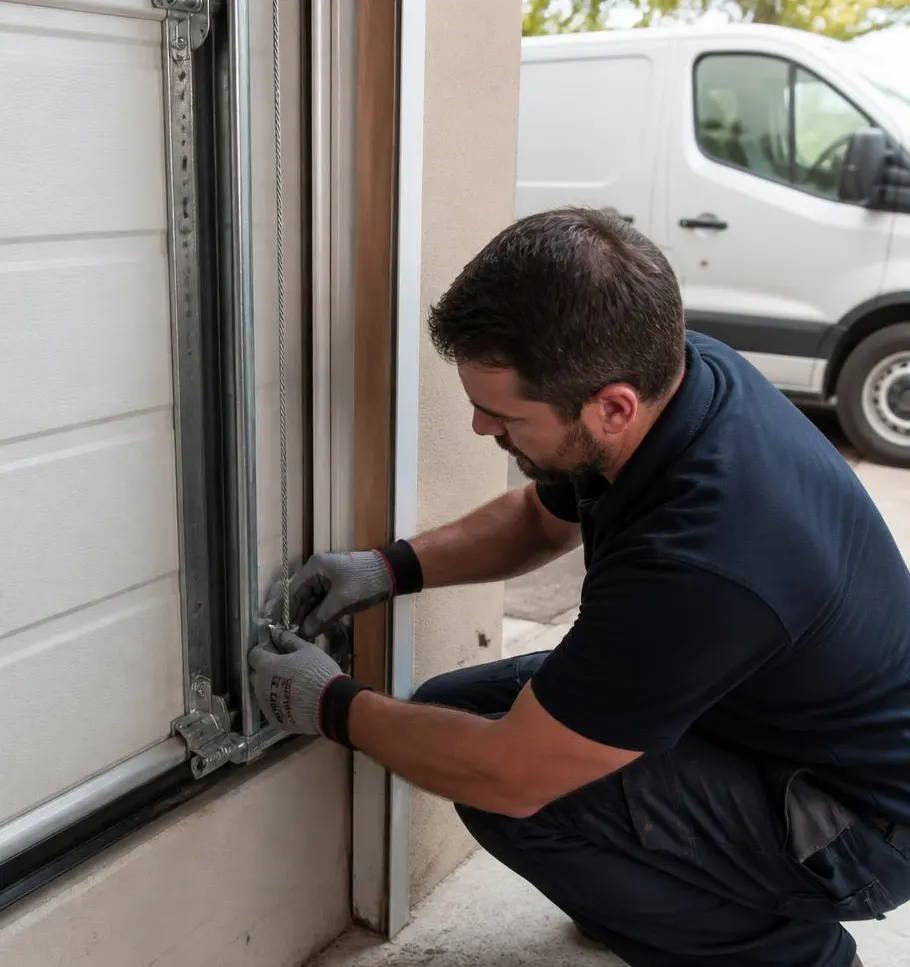
If the seal isn't the issue, the next check is the track. Humidity swings and salt-tinged coastal air cause two different problems here: wood door jambs can swell slightly, pinching the track out of alignment, and steel track brackets can develop surface rust that roughens the surface the rollers ride on. Either one adds friction a cold motor or stiff spring has less reserve power to overcome.
The fix: A technician checks the track with a level, looking for pinch points or gaps between bracket and rail. Minor misalignment gets tapped back into spec; rust gets cleaned and the track lubricated with a silicone-based product rather than household oil, which attracts dust and grime and makes the problem worse by spring.
3. Spring Tension in Cold Air
Steel springs lose a bit of flexibility in colder temperatures, and old lubrication on the coils thickens, adding drag right when the spring needs to flex freely to lift the door's full weight. This is usually what's behind a door that starts to rise and then stalls or drops back down — the opener is trying to do a job the spring isn't fully helping with.
The fix: This is not a DIY adjustment. Garage door springs are under extreme tension and the tools and process to re-lubricate or re-tension them safely are something a trained technician handles. If the spring shows rust pitting or visible wear beyond stiffness, replacement is the safer call rather than coaxing more life out of it.
4. Rollers and Hinges
Nylon rollers and metal hinges take the brunt of humidity and condensation cycles. Corroded hinges or rollers that have gone slightly oval from moisture exposure create a rougher ride through the track, which shows up as grinding noise and sluggish movement even after the seal and track check out fine.
The fix: Visual inspection of each roller and hinge, replacing any that are pitted, cracked, or no longer rolling smoothly. This is routine maintenance territory and cheap insurance against a bigger failure later.
5. The Opener Itself
Last on the list, because it's rarely the actual cause even though it's the part straining the loudest. Cold can slightly reduce chain or belt tension and make gears feel weaker, but if the door moves freely by hand and the opener still struggles, the issue is usually worn gears, a chain needing adjustment, or limit settings that need resetting — not the cold itself.
When to Call LaBelle Overhead Door Co
If warm water on the seal doesn't solve it, or the door is grinding, stalling, or reversing on its own, stop operating it and call us. We'll run through the same sequence above with the right tools for safely handling spring tension, and we offer Garage Door Maintenance & Tune-Up service to catch rust, worn rollers, and seal wear before the next cold front turns a minor stiffness into a stuck door. If the track has already shifted or bent from being forced, our Off Track Door Repair service gets it running true again.
If your garage door in LaBelle, FL is fighting you on cold mornings, don't force it — call LaBelle Overhead Door Co and we'll have it moving smoothly again.