
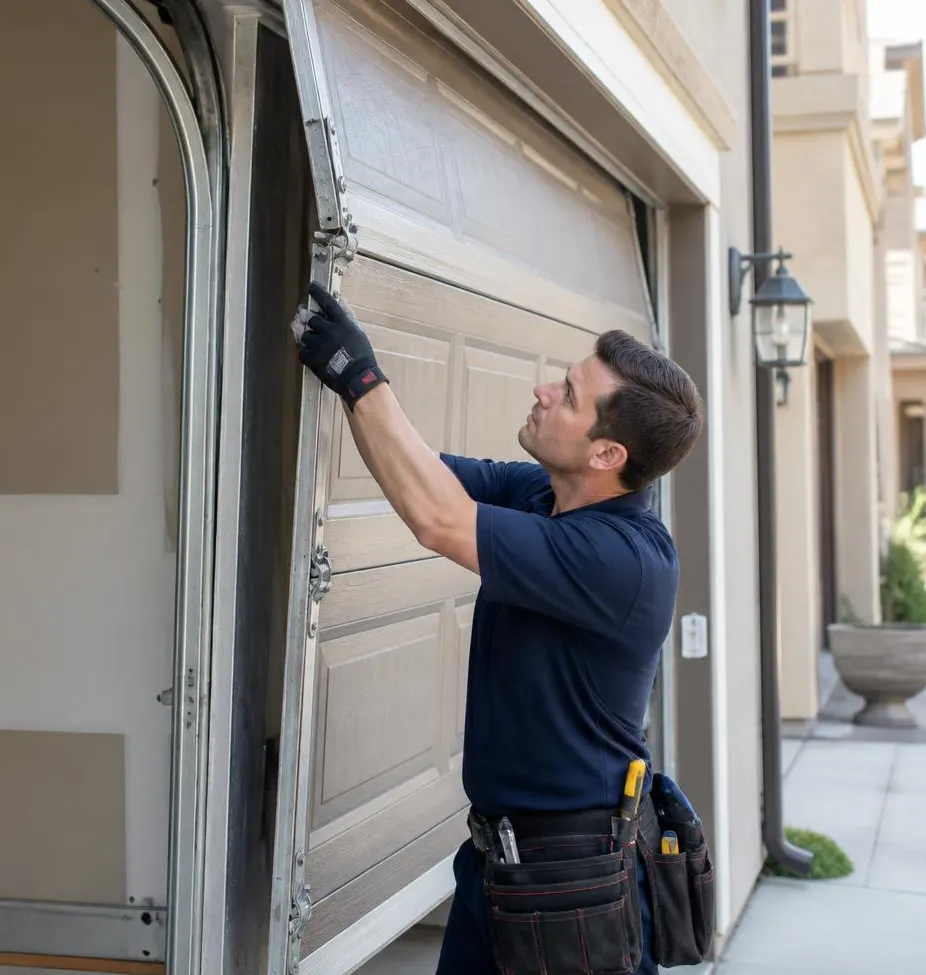
What a Service Call Usually Looks Like
The call almost always starts the same way: a homeowner is standing in the driveway, clicking the remote over and over, then walking inside to try the wall button with the same result. Sometimes it's happened overnight after a storm rolled through. Sometimes it's been building for weeks, with the door responding slower or only working on the second or third press before quitting altogether. By the time a technician gets there, the door usually hasn't moved at all, and the owner is understandably ready to replace the whole opener. Often that's not what's actually needed.
The Symptom Pattern Matters
Before touching anything, a technician wants to know exactly how the opener is failing, because the pattern points toward the cause:
- Remote dead, wall button works: points to the remote itself or the antenna, not the opener's core electronics.
- Wall button dead, remote works: points to the wiring or switch at the wall unit, not the opener's motor.
- Both dead, but the opener's light still comes on: suggests a logic board or control issue rather than a total power loss.
- Everything dead, including the light: points to power at the source — the outlet, breaker, or the opener's internal fuse.
Getting this detail right before opening anything up saves time and usually points straight to the fix.
The Checks, In the Order a Technician Runs Them
1. Power to the Unit
This gets checked first because it's the fastest to rule out and the most common after our afternoon downpours and storm season outages. A technician checks whether the opener is plugged in, whether the outlet has power, and whether a breaker or a GFCI outlet has tripped. Garage outlets in this area are often on GFCI circuits, and humidity or a small amount of moisture intrusion is enough to trip one. The fix here is simply resetting the outlet or breaker — but if it keeps tripping, that's a sign of a deeper wiring or moisture problem worth having looked at.
2. The Wall Button and Its Wiring
Next comes the wall-mounted control. These units sit inside the garage, which in this climate means they're exposed to heat, humidity, and sometimes swelling wood or trim around the door frame. A technician checks the low-voltage wire running from the button to the opener for breaks, corrosion at the connection points, or a wire that's been pinched or chewed through. The fix is usually re-stripping and reconnecting the wire, or replacing a wall button that's corroded internally. This is a quick, inexpensive repair when it's the cause.
3. Remote Batteries and Programming
If the wall button works but the remote doesn't, the batteries are checked first — not just whether they're dead, but whether they're corroded, since a leaking battery can look fine until you pull it out. After that, a technician checks whether the remote has simply lost its programming, which can happen after a power outage resets the opener's memory. Reprogramming the remote to the opener's rolling code takes a few minutes and solves this in most cases.
4. Antenna and Interference
If the remote still won't connect even with fresh batteries and correct programming, the opener's antenna is next. On many units this is a short wire hanging down from the motor housing, and it's easy for it to get bent, tucked up out of the way, or damaged over time. A technician also checks for interference — LED bulbs in nearby fixtures, security lighting, or even electrical noise from storm-damaged wiring nearby can disrupt the signal. The fix ranges from repositioning the antenna to swapping out a bulb that's interfering with the frequency.
5. Photo-Eye Sensor Alignment
This one surprises a lot of homeowners, because misaligned sensors usually block the door from closing rather than stop it from responding at all — but some openers are programmed to ignore commands entirely when the sensors are out of alignment. Humidity and moisture cause garage door tracks and frames to swell and shift slightly, which is enough to knock the sensors out of alignment over time, especially after a season of heavy rain. A technician checks that both sensor lights are solid and the eyes are facing each other squarely. Realigning them is usually a five-minute fix, though a sensor with corroded wiring from moisture exposure may need replacing.
6. The Logic Board
If every other check comes back clean, the opener's circuit board is the remaining suspect. These boards don't hold up well to power surges, which are common during hurricane season storms, and humidity over the years can corrode the internal connections even without a dramatic failure. A board that's been slowly degraded often causes exactly this symptom — intermittent response, then no response at all. At this point, replacing the logic board or the opener itself becomes the more reliable fix, especially on an older unit that's already had other issues.
When to Call LaBelle Overhead Door Co
If you've checked the obvious — power, batteries, sensor alignment — and the opener still won't respond, it's worth having a technician diagnose it rather than guessing further. We handle this exact call regularly across LaBelle and Hendry County, and our Garage Door Maintenance & Tune-Up service catches wiring corrosion and sensor misalignment before they leave you stuck. If the diagnosis points to a failing board or an opener that's reached the end of its reliable life, our Garage Door Opener Installation service gets you a new, properly matched unit instead of patching an old one indefinitely.
If your opener in LaBelle, FL has stopped answering the remote or the wall button, call LaBelle Overhead Door Co and we'll get it diagnosed and working again.