
Rule of thumb: do your garage door's winter check before the first real cold front, while the air is dry and the door is calm
The exceptions: if your door took a beating during hurricane season, if you're near the coast and fighting salt air rust, or if you have a wood or wood-composite door that swelled over the summer, don't wait for a cold front — those issues need attention now, before cooler temps lock a misaligned door into place for the next few months.
Why dry season is actually the easy season for garage doors
Hendry County winters aren't harsh, but they are different: lower humidity, cooler mornings, the occasional gusty cold front, and a lot less of the afternoon downpour pattern that soaks everything from June through October. That shift matters for a garage door. Humid air swells wood panels, weatherstripping, and even some composite doors; dry air lets all of that shrink back down. It's the one stretch of the year when you can actually see and fix problems that summer humidity was hiding.
1. Inspect hardware for hurricane-season fatigue
Even if your door made it through storm season without visible damage, high winds put repeated stress on springs, cables, and track brackets — especially on wind-load rated doors where the reinforcing struts and header connections do a lot of work during gusts. Before winter settles in:
- Look at the torsion spring for gaps in the coils or visible rust streaks.
- Check lift cables for fraying near the bottom bracket.
- Run your hand along the track (carefully) to feel for loose bolts or brackets that shifted during high winds.
- Open and close the door manually (with the opener disconnected) to feel for binding or uneven resistance.
None of this requires special tools, but springs are under serious tension and shouldn't be adjusted or replaced by hand — that's a job for a technician, not a weekend project.
2. Reseal the bottom and sides
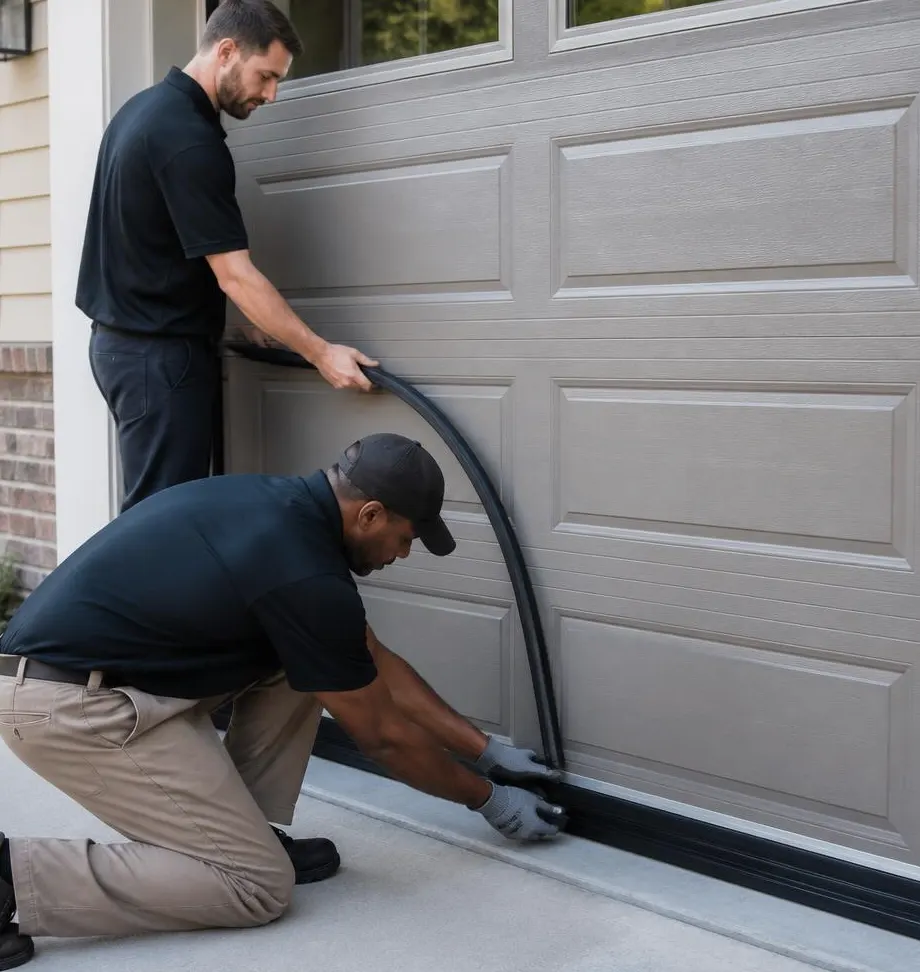
Weatherstripping takes a beating from UV, heat, and moisture all summer. By November it's often cracked, flattened, or pulling away from the track. In winter, a bad seal doesn't just let in cold mornings — it lets in dust, dry leaves, and small pests looking for a warm garage to move into as outdoor temperatures drop. Replacement bottom seals and side seals are inexpensive and usually a straightforward swap, but measure your track width before buying, since residential doors use a couple of common profiles that aren't interchangeable.
3. Re-lubricate everything that moves
Humid summer air actually helps old lubricant stay workable; dry winter air does the opposite, letting grease on rollers, hinges, and the torsion spring stiffen or flake off. Combine that with any rust that got a foothold from salt air or summer storms, and you get the grinding, popping, or squealing sound that shows up right as the weather cools. A simple fix: wipe down hinges and rollers, then apply a silicone-based or lithium garage-door-specific lubricant (skip WD-40 as a long-term lubricant — it's a cleaner, not a grease). Do the rollers, hinges, torsion spring, and the track's moving parts, not the track surface itself.
4. Test the opener, sensors, and backup battery
Cold fronts often bring brief power blips, and if your opener has a battery backup, winter is a good time to confirm it's still holding a charge rather than finding out during the next outage. While you're at it:
- Check that the photo-eye safety sensors near the bottom of the track are clean and properly aligned — summer humidity and dust can knock them slightly off or fog the lenses.
- Test the auto-reverse function by placing a block of wood in the door's path.
- Replace the remote or keypad batteries if response has gotten sluggish.
5. Adjust for wood and composite doors that shrank
If your door swelled during the humid months and you compensated by loosening the track or opener's travel limits, dry winter air will shrink the panels back to size — which can suddenly leave the door rattling in its track or not sealing tightly at the bottom. Walk around the closed door and look for new gaps of daylight along the sides or bottom that weren't there in August. Minor travel-limit adjustments on the opener can usually correct this.
When to call LaBelle Overhead Door Co
If your inspection turns up a spring with visible gaps or rust, a cable that's fraying, a door that's binding or off track, or an opener that won't hold its backup charge, that's the point to stop troubleshooting and call in a technician. Our Garage Door Maintenance & Tune-Up service covers exactly this kind of pre-winter check — hardware inspection, lubrication, sensor alignment, and seal replacement in one visit — and if we find a spring or cable that's past its service life, our Cable & Roller Replacement service handles it the same day in most cases. Catching these issues now, while the weather's mild and dry, is a lot easier than dealing with a stuck or off-track door in the middle of a cold snap.
If you're anywhere in LaBelle, Clewiston, Immokalee, Lehigh Acres, Alva, Moore Haven, Felda, or Fort Denaud and want your garage door checked before winter settles in, give LaBelle Overhead Door Co a call. We'll get it done right, the first time.